Sentiment Analysis: A Comprehensive Guide
The innate ability of humans to understand emotion and sentiments sets them apart from every known species. Machines today are trying to mimic this quality. We, humans, display sentiments in everyday sentences that we speak. Currently, businesses adopting sentiment analysis tools in a bid to analyze the tone and sentiments expressed in the opinions of their consumers.
In a world where many gigabytes of data is produced every day, creating vast oceans of it, opinion mining is not easy unless guided by artificial intelligence. However, why should companies worry about consumer sentiments? How does sentiment analysis work? What are its limitations and advantages?
Let’s start with the concept of sentiment analysis and then try to understand its value proposition for business owners.
What is Sentiment Analysis?
Sentiment Analysis is a subset within the umbrella of Natural Language Processing (NLP). It is the process of understanding the opinions and perceptions of your consumers using the data mined from social media, review boards and others.
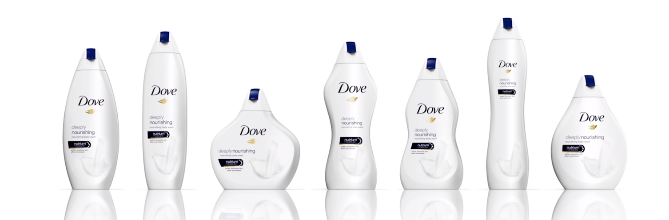
The famous personal care brand – Dove, had initiated a campaign to advocate the need for embracing a positive body image, for women. The campaign’s idea was to depict the shapes of ordinary women rather than professional models. In a bid to represent the various shapes and sizes of a woman, they had released bottles of varied shapes. Some of these were hourglass-shaped, some pear-shaped, some thin and slender and so on. However, what seemed like a novel thought turned out to be quite the opposite. The campaign was perceived as offensive by many women and eventually had to be taken down. If Dove wasn’t paying attention to the sentiments of its customers, the campaign could have caused real damage to its brand.
Consumer perceptions play a vital role in ensuring the success of your company’s campaigns or product launches; they actually decide your brand’s health.
Why is Sentiment Analysis Important?
“A satisfied customer is the best business strategy of all” – Michael LeBoeuf.
Your customers are the reason for your existence, so their voices, opinions, and needs should matter. Sentiment analysis helps you gain clear insights without having to seek direct feedback or validation. Consumers today express their views about their experience with a brand using the internet, social media, review boards et cetera, and these are accessible to the entire world. One bad review can cost a company its reputation, which may have been built painstakingly over years if not decades.
Using social listening to tap all the data around your brand and processing it further for opinion mining can provide you the following benefits:
Crisis Management
Detect an issue and take control before it becomes a pain point and hinders potential future customers from converting.
Brand Health
Sentiment analysis is a great tool which offers a quick way to judge your brand’s reputation, your weaknesses, strengths.
 Key Strengths
 Key Strengths
Chatter with a positive connotation helps you identify and understand your key strengths and build on them.
Strategic Planning
Sentiment analysis is a window which drills down to identify and show you the specific problems. This helps you strategically plan your corrective measures.
Uses and Applications of Sentiment Analysis
User-generated content can become your best friend for sentiment analysis. Multiple corrective measures may suggest themselves while analyzing the data available via internet sources. Sentiment analysis helps with different aspects of brand reputation management including:
Brand Monitoring
Keeping an unwavering eye on every comment, every review, and analyzing it to understand the tone can be tedious and hinder fast-paced action, without adopting a tool. Continuous monitoring and opinion mining are necessary to maintain the reputation of your organization amongst the public and competitors.
Business Intelligence
Sentiment analysis does a lot more than tell you whether your customer is happy or disappointed. Data mining provides you a breakdown of the exact fault lines, tracks the overall perception of the brand amongst the masses, and tells you whether the growing chatter in the marketplace is in your favor or against. Decision making becomes a little more easy with such insights within your reach.

Customer Service
There’s no doubt that the better your service is, the better your chances are, of retaining customers. Gaining loyal customers results in spreading positive word-of-mouth which brings you more customers, and the cycle continues. However, as per a McKinsey report, about 25% of customers shift to a competitor brand after just one negative experience. Sentiment analysis helps you deliver on your customer service promises and to tailor your business to be more customer-centric.
Product/Service/Campaign Analysis
Customer opinion can make or break your product reception or even the success of your marketing campaigns – which in turn can ruin your brand’s image. Seeking frequent feedbacks and working to eliminate your current shortcomings serves to satisfy your customers and make them believe that your brand cares for their voices.
Market Research
Sentiment analysis also assists with prototyping for any market research, before a product or campaign launch. It is extremely essential that you become aware of how the audience receives the message before you let your brand get involved more.
Sentiment analysis grows more accurate each day, yet there are a few challenges which become evident and troublesome at times. The challenges include the inability of the tools to judge the true sentiment in cases of sarcasm and irony and polarity used by humans. For example a sentence like:
“Great service. 1 hour for a cup of coffee – Unbelievably fast delivery!”
has words like great and fast delivery which have a positive connotation to the tool, but not for us in this context. Sentiment analysis tools lack the capability to understand such sarcasm, unlike the human mind and could flag such comments as positive. But, as the model keeps getting trained, machine learning keeps helping the tool to evolve, and these challenges are bound to vanish over time.
All said and done, AI as a field is still young but growing very quickly, and so is sentiment analysis. Despite the few drawbacks, it can be applied to a multitude of business problems and prove to be a marketer’s true best friend.